
Notan Master
Thumbnails
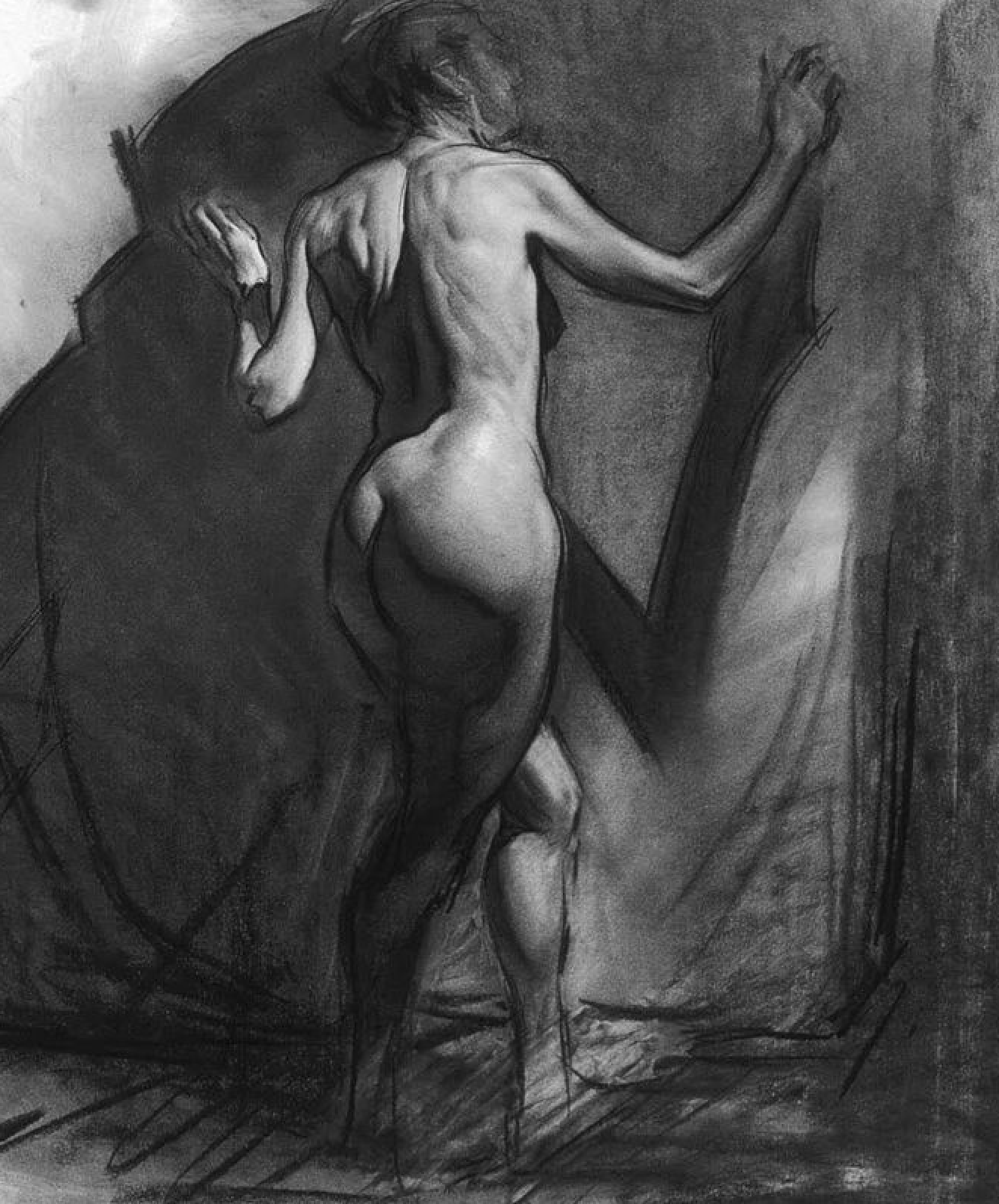
Notan Master Thumbnails
“Notan is a Japanese term that refers to the balance between areas of light and shadow in a composition.”
I’m excited to dive into Notan master thumbnails, which are two to three value master studies for exploring values. Studying values and value composition feels like solving little puzzles. It’s all about interpretation, and there isn’t always a correct answer. I’ll show several variations of each piece to demonstrate this.
Studying Lepage’s Portrait
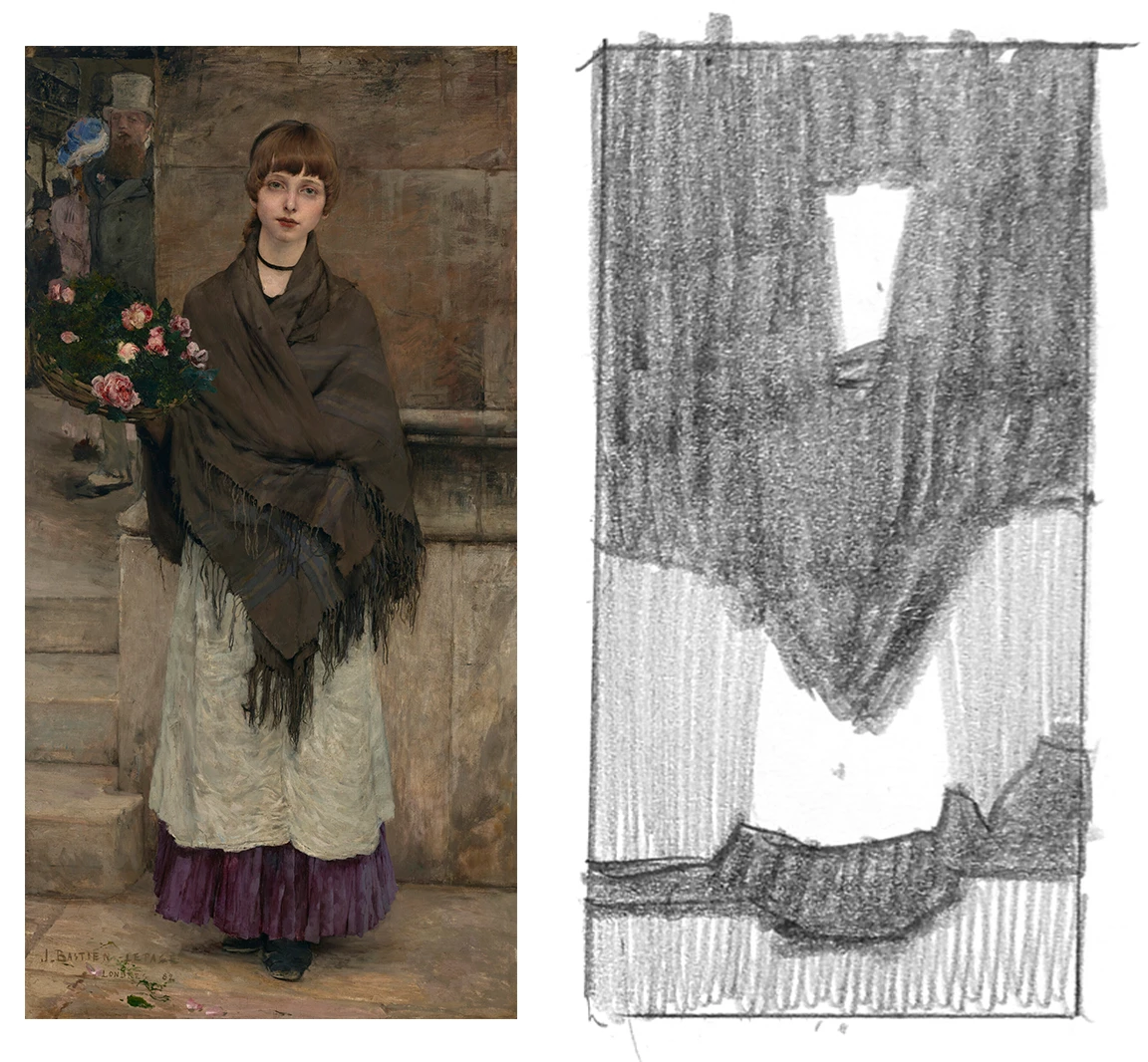
The first painting I’m tackling is a beautiful full-figure portrait by Jules Bastien-Lepage. At first glance, it seems complicated with lots of detail, steps, flowers, a figure in the background, folds in the drapery. But when I squint at it, the composition simplifies dramatically.
Simplifying Values
When I squint, I notice:
- The top half is very dark, except for her face and neck, which pop forward as bright values against the dark background.
- The bottom half, including the steps and wall, blends into a lighter value.
This simplification reveals a well-organized composition with good control of values.
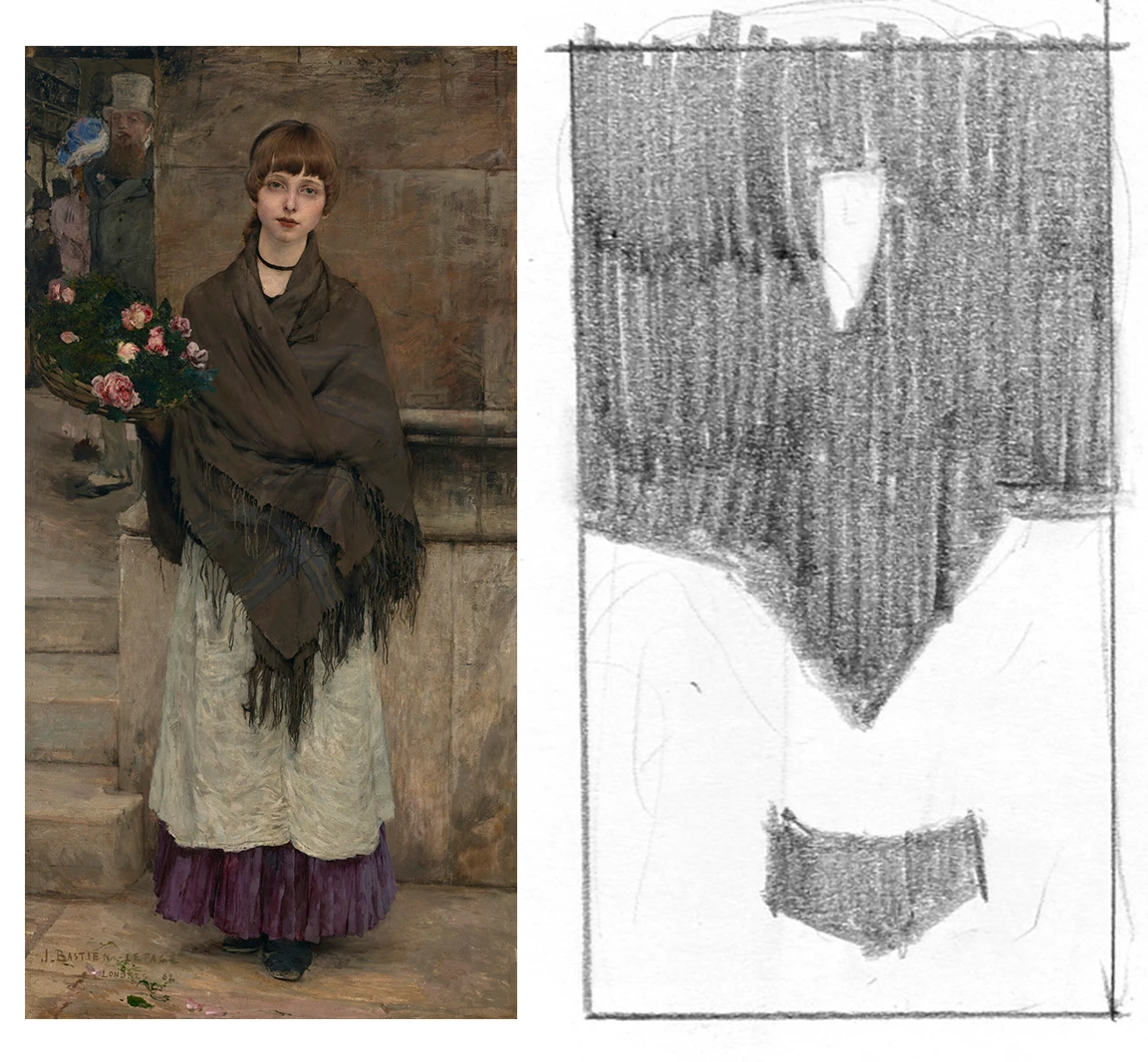
Two-Value Studies
I start with two-value thumbnails. In the first interpretation, I see dark at the top and light at the bottom. The face is a light shape on dark, and the lower part of her dress and feet form a dark shape on light. Simplifying the shapes, I create a basic composition:
- A dark triangle at the top with her head as the light shape.
- A dark shape of her dress against the light background at the bottom.
Filling these in, we immediately see the core composition. Even though it’s overly simplified and abstract, we haven’t lost the value distribution or composition balance.
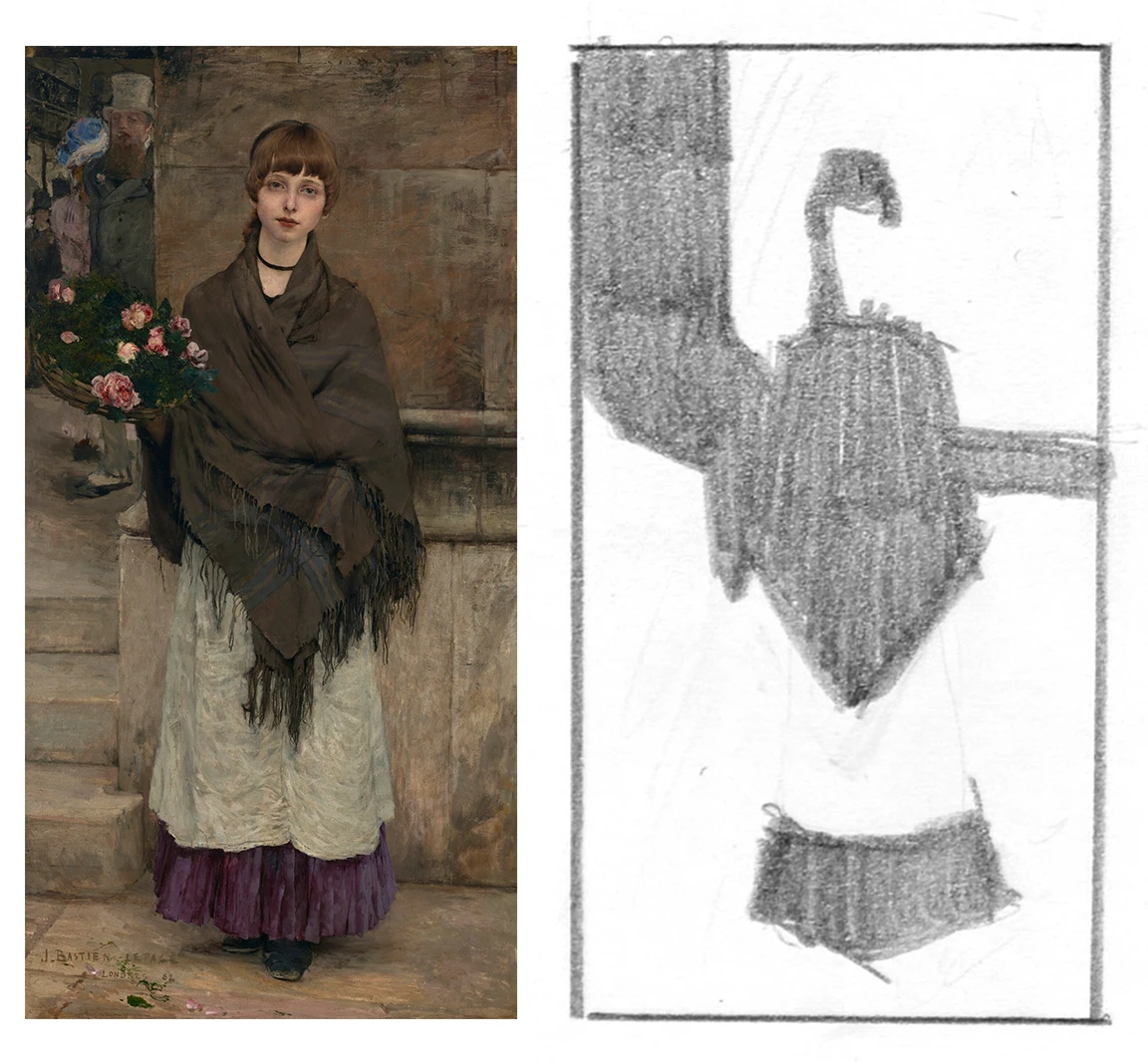
In another interpretation, I adjust the threshold between dark and light. This time, I include the wall behind her torso as part of the lights, creating a different composition. Both interpretations are valid, they show how sliding the threshold can lead to different but equally true representations.
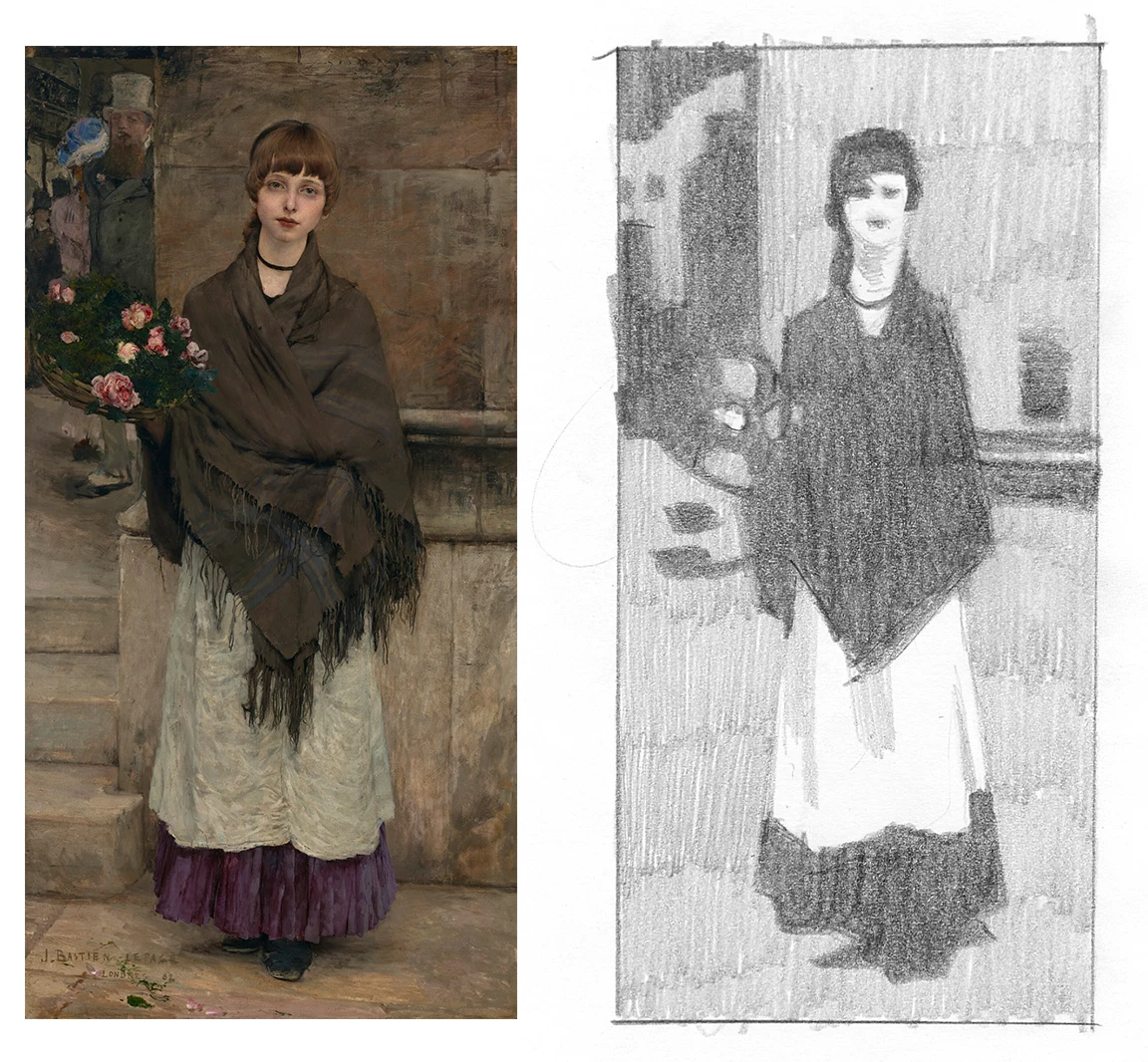
Three-Value Study
Adding a third value introduces middle tones. I decide where the darkest values will end and start to include some medium values:
- The darkest darks are the background, her hair, and certain parts of her dress.
- The middle value areas include the wall and some drapery.
I focus on simplifying shapes and avoid getting caught up in details like shoes, folds, or flowers. This helps me study the masses and composition rather than individual elements.
By adding the middle value, the composition gains depth, highlighting the contrast between light, middle, and dark areas. The face and dress remain the lightest shapes, drawing attention to them.
Multiple Interpretations
There are many ways to interpret the values in a painting. By sliding the threshold and grouping values differently, you can create various compositions. For instance, linking the dark shapes at the bottom with shadows on the wall forms a horizontal dark band, leading to a repeating pattern of light and dark.
Different interpretations are all valid. It’s about how you choose to see and simplify the painting’s values.
Practical Applications
These value studies aren’t just exercises, they are practical tools. Artists often use thumbnails to plan compositions before working on larger canvases. Simplifying values helps in understanding the overall design, without getting lost in details.
Looking at works by artists like William Trost Richards, we see he used simple sketches and value studies as preparatory steps. His thumbnails focus on major value groupings and compositions, much like we’re doing here.
* * *
Studying values through Notan master thumbnails allows us to explore different interpretations and understand the underlying composition of a painting. By simplifying and focusing on major value groups, we gain insights that enhance our own work. Lepage’s painting is a beautiful example, rich for studying composition and major value breakups.
Get in Touch By Phone Or email
We use whatapp or classic email.
Phone
contact@atelierbiscuit.art